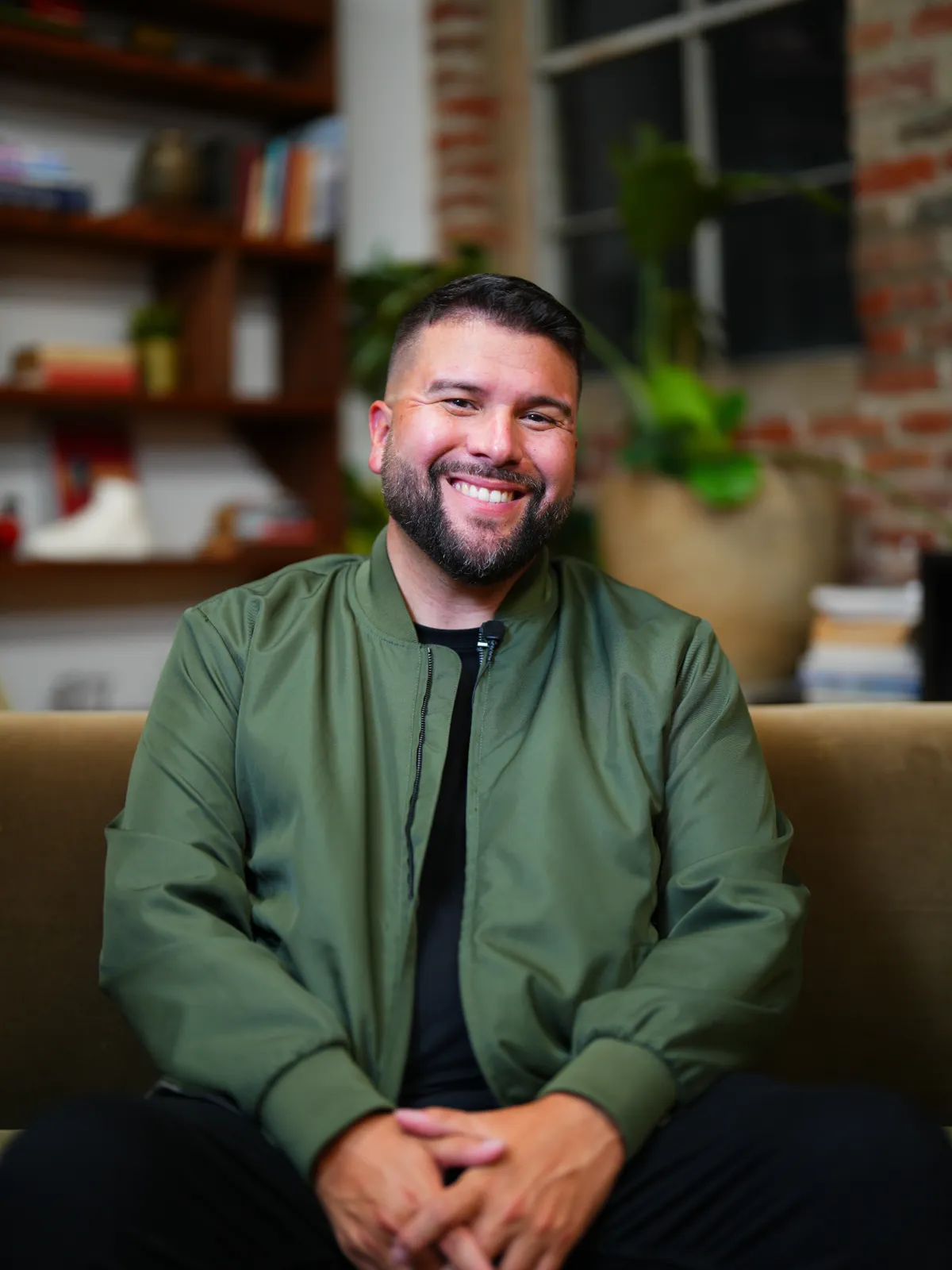
I've delivered this keynote on dozens of stages over the last few years. Social Media Marketing World. VidSummit. Digital Summit. VeeCon. Industry conferences across the country.
Every time, I ask the audience the same question.
"If I gave you a magic button — one button — and you had to pick: 1,000 email subscribers OR 100,000 social media followers. Which one do you pick?"
The answer changes based on the room. The reasoning always tells me the same thing about where the room is in their marketing maturity.
The unsophisticated room picks 100,000. They're staring at the bigger number.
The sophisticated room — operators who've been through a platform ban, an algorithm change, a sudden reach collapse — picks 1,000. They've seen the cost of building on rented land.
After the keynote, when I dig into the math with the room, almost everyone changes their answer.
This post is that math, in writing.
If this is the positive case for email, Social Media Is Dying → is the negative case for social. Together they bracket the full SendFocus thesis: Post Less, Send More.
Watch the Full Keynote
The full keynote, recorded live. ~22 minutes.
The Three Asymmetries
The 1,000 vs 100,000 question isn't a debate about size. It's a question about three structural asymmetries that most marketers don't think about until the asymmetry costs them money.
The Reach Asymmetry. A social platform decides whether your post reaches your followers. You decide whether your email reaches your subscribers.
The Conversion Asymmetry. Per person reached, email converts far better than social. The context, the intent and the permission are all on your side.
The Resilience Asymmetry. Your social audience belongs to the platform. Your email list belongs to you. Platforms die. Email doesn't.
Each one of these asymmetries alone is enough to settle the debate. Stack all three and there's nothing left to argue.
Asymmetry #1: The Reach You Actually Get
Most marketers think their "followers" are their audience. They aren't. Their followers are the platform's audience. Some of those followers see some of their posts sometimes, when the algorithm decides.
Here's what actual reach looks like in 2026 across the major platforms:
- Instagram organic reach: 2-4% of followers see a typical post
- Facebook organic reach: 1-3% for unpaid posts
- LinkedIn organic reach: 5-15% for personal accounts, 1-3% for company pages
- X/Twitter organic reach: 2-8% depending on engagement velocity
- TikTok organic reach: Highly variable — can be 50%+ for one viral video and <1% for the next
- YouTube organic reach to subscribers: 5-10% see a typical upload in their feed
Now do the math on 100,000 followers.
At 3% average reach, 100,000 followers means about 3,000 people see your post. Of those, maybe 1-2% engage. Maybe 0.1% click anything. Maybe 0.01% convert if you're selling.
That's the optimistic version.
Compare that to 1,000 email subscribers. Email open rates average 25-40% for healthy lists. That's 250-400 people who actually see your message. Click-through rates run 2-8%. Click-to-conversion runs 2-10%.
The 1,000-subscriber list reaches roughly the same number of people as the 100,000-follower account. Often more.
This is before we get to conversion.
Asymmetry #2: The Conversion You Actually Get
Reach is half the equation. Conversion is the other half — and it's where the 1,000 vs 100,000 question gets uncomfortable for the social-first crowd.
Email converts dramatically higher than social media on every meaningful metric. Always has. Every data study going back a decade tells the same story:
- DMA research: Email generates $36 for every $1 spent. No social channel comes within a fraction of that.
- Klaviyo benchmark data: Email contributes 30-50% of total revenue for mature DTC brands.
- Substack data: Paid newsletter subscribers convert at 5-15% of free subscribers — a rate impossible on social.
The reasons are structural:
Context. An email arrives in an inbox the recipient is actively checking. A social post appears in a feed the recipient is passively scrolling.
Intent. People who give you their email have demonstrated commercial intent. People who follow you on social have demonstrated curiosity.
Format. Email gives you 300-1,500 words to make your case. Social gives you 1-3 seconds of attention.
Permission. Email is invitation-based. Social is interruption-based.
This is why an engaged 1,000-subscriber email list generates more revenue than most 100,000-follower social accounts. The conversion math compounds.
Asymmetry #3: The Platform Risk That Most Marketers Ignore Until It's Too Late
The first two asymmetries are about today's value. The third is about tomorrow's risk.
When you build an audience on a social platform, that audience belongs to the platform. Not you. The platform has the right to:
- Change the algorithm that decides who sees your posts
- Restrict, demote, or ban your account
- Change monetization rules overnight
- Shut down entirely
- Be acquired and pivoted by new ownership
Every social platform we built audiences on a decade ago has done at least one of these things. Some have done all of them.
I've lived this personally. My Instagram account was shadowbanned without warning in 2019. My reach went from 80,000+ engagements per post to under 500. No explanation. No appeal that worked. Years of audience-building suddenly inaccessible.
I built an audience again on TikTok during COVID with Outlaw Masks — 300K+ followers, 25M+ monthly views. Then mandates ended, the trend died, and TikTok's algorithm shifted attention elsewhere. The followers were still there. The reach wasn't.
I've watched dozens of operators go through worse versions of this. Friends with 500K Instagram followers banned permanently for no documented reason. Creators who built six-figure businesses on YouTube watching their channels get demonetized after a policy change. TikTok creators preparing for the platform to disappear from the U.S. entirely.
Through all of it, the same pattern: the operators who had email lists barely noticed. The operators who didn't were rebuilding from zero.
Email is your insurance policy. Email is your ownership. Email is the channel that doesn't ask permission to reach your audience.
The Math on What 1,000 Subscribers Is Actually Worth
Let's get specific about value.
Donald Miller estimates an email subscriber is worth approximately $35 over their lifetime. Your number will be different. Use his as a starting point, then calculate your own.
At $35 per subscriber:
- 1,000 subscribers = ~$35,000 in lifetime value
- 10,000 subscribers = ~$350,000 in lifetime value
- 100,000 subscribers = ~$3.5 million in lifetime value
A social media follower? Worth approximately $0 unless that follower converts to email, customer, or paid subscriber. The follower is leverage, not value. The list is value.
That's the math behind the keynote. A 1,000-person email list is worth ~$35,000 in expected lifetime revenue. A 100,000-follower social audience is worth ~$0 in direct lifetime revenue (it's worth indirect value via discovery, but only if you actually move people from social to email).
You can run the same calculation in your own business. Pull your email revenue from the last 12 months, divide by subscribers, get your actual per-subscriber lifetime value. Compare that to your social media revenue divided by followers. The gap will be larger than you expect.
Results may vary. Past performance does not guarantee future results.
The Counterarguments (And Why They Don't Hold)
Every time I deliver this keynote, I get the same three objections. Each one has a clean answer.
"But social drives discovery."
True. Email isn't a discovery channel. Social is. Use social for what it does well — top-of-funnel awareness, getting in front of new humans, building first-touch trust.
But every social post should have one underlying purpose: move the right people to your email list. Social media is the storefront window. Email is the cash register. Don't confuse the two.
The operators winning in 2026 aren't choosing social OR email. They're using social to fuel email and email to generate revenue. The argument isn't "abandon social." It's "stop pretending social is your audience when it's actually a discovery channel."
"1,000 is too small to matter."
It's not. It depends entirely on what you do with them.
A 1,000-person email list that's never been monetized produces near-zero revenue. A 1,000-person list with a proper welcome sequence, a clear product offering, and basic segmentation is a real business asset.
I watched this at The Hype Section, our sneaker and sports card store in Jacksonville. Nobody went viral. We captured email and SMS at checkout, one customer at a time, and that list drove a $1M first year from a single location.
Size matters less than quality and architecture. 1,000 engaged subscribers with a real system beats 100,000 disengaged subscribers with no system. And it beats 100,000 social followers in any honest revenue comparison.
"AI is changing everything — does this still apply?"
More than ever. The AI flood has made social media more crowded with mediocre content. Audiences are calibrating fast — they recognize AI-written social content within seconds and tune it out.
Email is harder to fake. The relationship in someone's inbox is more intimate than the relationship in someone's feed. When someone trusts you enough to give you their email, they're trusting you enough to read what you send.
AI multiplies the gap between sophisticated marketers and unsophisticated ones. The sophisticated marketers are using AI to better serve their owned email lists. The unsophisticated marketers are using AI to flood social feeds with mediocre content nobody reads. Guess which strategy compounds. See how to use AI for marketing in 2026 for the full framework.
What to Actually Do
The keynote ends the same way every time — with practical, specific action steps.
1. Build the bridge from social to email today.
Stop posting on social with no path back to your email list. Every meaningful piece of social content should have a way for the right people to give you their email. A lead magnet. A free training. A weekly newsletter signup. A specific incentive.
If your bio says "DM me for info," you're failing the bridge test. The bio should drive to a landing page. The landing page should drive to an email opt-in. Every social post should have an underlying reason for the audience to take that step.
2. Treat your email list as infrastructure, not a checkbox.
Most operators have an email list and almost nothing else. No welcome sequence. No segmentation. No automated flows. No reactivation campaigns. Just an occasional broadcast.
That's the operator equivalent of buying a Ferrari and never changing the oil. The asset exists. The system doesn't. The revenue isn't there because the infrastructure isn't there.
Build the welcome sequence. Build the nurture flow. Build the conversion sequence. Build the segmentation. Build the reactivation. Each layer compounds.
3. Use social for what it does well. Use email for revenue.
Social media is the most efficient awareness channel ever invented. It's terrible for direct conversion. Email is the opposite — bad for awareness, exceptional for conversion.
Stop trying to make social do email's job. Stop trying to make email do social's job. Run them in their natural roles. Move people from social (rented land) to email (owned land). Convert in email. Compound forever.
The Hard Question
Here's the part of the keynote where the room goes quiet.
If you knew today that your favorite social platform — the one your business is most dependent on — would shut down in 30 days, what would happen to your business?
Would you have an audience you could still reach?
Would you have a way to make sales without that platform?
Would you have any infrastructure that survives the shutdown?
For most marketers, the honest answer is no. They've built their entire business on top of a platform they don't own. They have followers, not subscribers. They have engagement, not relationships. They have reach, not assets.
This is the cost of the asymmetry. Until you build owned audience infrastructure, you're always one platform decision away from a revenue crisis.
The fix is the same in 2026 as it was in 2016. Build the list. Build the system. Build the relationship that doesn't ask permission.
Why This Matters for Your Business
I've spent the last decade helping operators build email infrastructure that survives every platform shift. Through GetResponse, where I served as Contracted Brand Evangelist. Through SendFocus, where my team builds the email + retargeting + monetization systems for creators, founders, and brands. Through The End of Marketing, where I wrote the playbook for this thesis in book form.
Every engagement starts with the same realization: the operator has an audience but no system. The fix isn't growing the audience. The fix is building the infrastructure that turns the audience into revenue.
If you want this applied to your business — your audience, your offers, your data, your voice — book a Strategy Day. Four hours synchronous, a 25-page strategy report, 30 days of Slack support. $2,500 flat.
Want to see the SendFocus methodology before you book anything? Read the Revenue Engine, my free 32-page framework. Get the free Revenue Engine →
If you're an email service provider that wants this thesis delivered to your audience — keynote, webinar, partnership content — see the GetResponse case study for what a brand evangelist engagement with me looks like.
Related Reading